



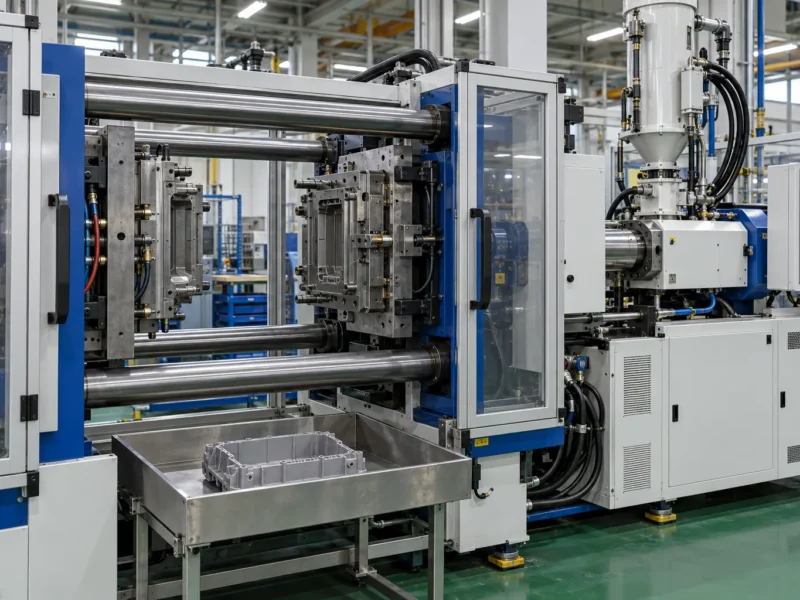
BMC (bulk molding compound) can be molded in two main ways: injection molding and compression molding (transfer molding is a third, less common route). The same compound gives different parts and different costs depending on the process. This guide compares the two.
How each process works
Injection molding: a stuffer feeds the dough into a low-compression screw. The barrel is water-tempered and kept cool, typically about 25–45 °C, and the compound is injected through a runner and gate into a mold heated to typically about 150–180 °C, where it cures.
Compression molding: a weighed charge is placed in an open mold heated to typically about 140–160 °C, and the press closes to shape and cure the part. There is no runner or gate.
Comparison
| BMC injection molding | BMC compression molding | |
|---|---|---|
| Fiber length in the part | Shorter (sheared in screw, runner and gate) | Longer |
| Strength and impact | Lower | Higher |
| Detail, thin walls, ribs | Very good | Good |
| Dimensional accuracy | Very good | Good |
| Cycle time | Shorter, automated | Longer, more manual handling |
| Mold cost | Higher | Lower for the same part |
| Material waste | Runners and sprues cannot be reused | Mainly flash |
| Best for | Small to medium detailed parts in volume | Thick sections, larger parts, lower volumes |
Typical, simplified comparison.
Typical parts for each
- Injection: headlamp and lamp reflectors, circuit breaker and switch housings, motor end caps, small insulators and terminal blocks.
- Compression: thick insulators, heavy-section electrical parts, larger housings and parts where strength matters more than fine detail.
How to decide
- Estimate the lifetime volume. High volumes favor injection, because faster cycles pay back the more complex mold.
- Check the part: fine detail and thin walls favor injection; thick walls and strength favor compression.
- Check the tolerances and surface: reflectors and tight dimensions usually favor injection.
- Compare total cost, mold plus parts, over the product life.
If your part is large or needs the highest strength, look at SMC instead: see BMC vs SMC vs thermoplastics and what SMC is.
Frequently asked questions
What is a cold runner in BMC injection molding?
In thermoset molding a “cold runner” is a runner block kept below curing temperature, so the compound in it stays uncured and is injected in the next shot instead of being wasted.
Can BMC be molded with inserts?
Yes, in both processes. Metal inserts are placed in the mold before molding and anchored by the cured compound.
Is transfer molding the same as injection molding?
Not quite. In transfer molding a charge is pushed by a plunger from a pot into the closed mold. It sits between compression and injection and is often used for parts with delicate inserts.
Have a BMC or SMC part to discuss? Send your drawing or 3D file through our inquiry form. Our engineers reply with DFM comments and a quotation.