Molding compounds
What BMC and SMC are made of
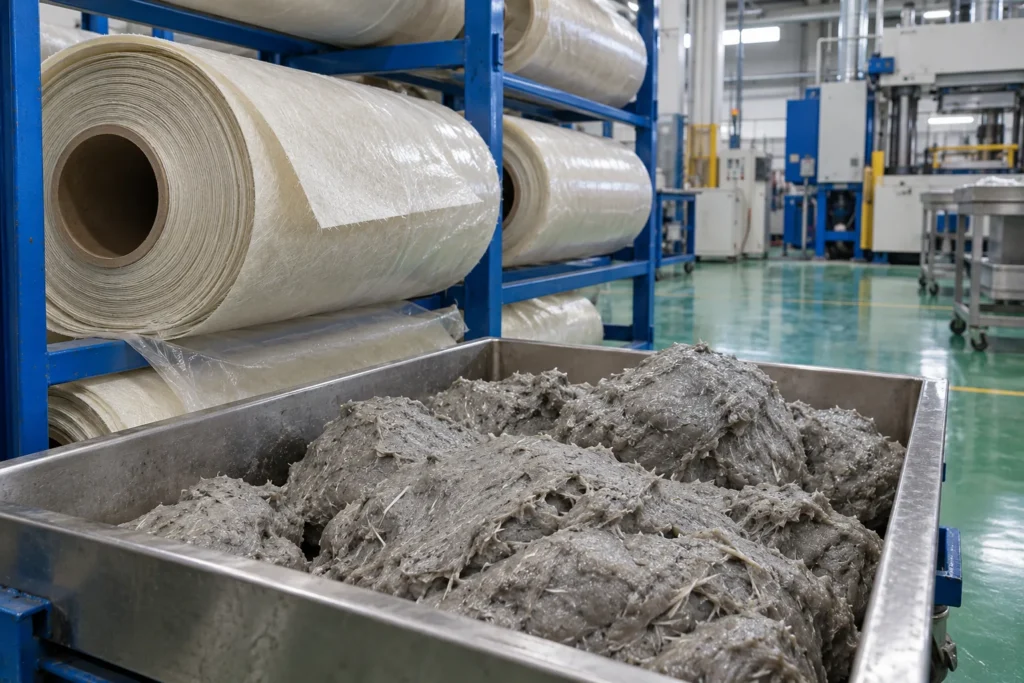
Both compounds combine a thermoset resin (usually unsaturated polyester, sometimes vinyl ester) with chopped glass fibers, mineral fillers, an initiator, an internal mold release and other additives. SMC (sheet molding compound) comes as a sheet with longer fibers, typically about 25 mm. BMC (bulk molding compound, also called DMC) is a dough with shorter fibers, typically about 3–12 mm.
The grade follows the application: flame retardant grades for electrical parts, low-shrink and low-profile grades for flat, smooth or paintable surfaces, high-glass grades for strength, and pigmented grades for molded-in color.
Common grade types
| General purpose | Balanced strength, stiffness and cost for enclosures, covers and housings. |
|---|---|
| Flame retardant | Formulated to meet requirements such as UL 94 V-0 at a stated thickness, for electrical and electronic parts. |
| Low shrink / low profile | Very low shrinkage for flat parts, tight tolerances and smooth, paintable surfaces, including reflectors. |
| High strength | Higher glass content for structural and load-bearing parts. |
| Electrical grades | High dielectric strength and tracking resistance (CTI 600 is common in electrical grades) for insulators, switchgear and breaker parts. |
| Colored grades | Pigmented compound for molded-in color, often used for outdoor enclosures and sanitary parts. |
Property values depend on the supplier and the exact formulation. We work from the material data sheet and, where needed, test plaques or sample parts.
Materials FAQ
What does BMC stand for?
Bulk molding compound: a dough-like thermoset compound of resin, chopped glass fibers and fillers. It is also called DMC, dough molding compound.
What does SMC stand for?
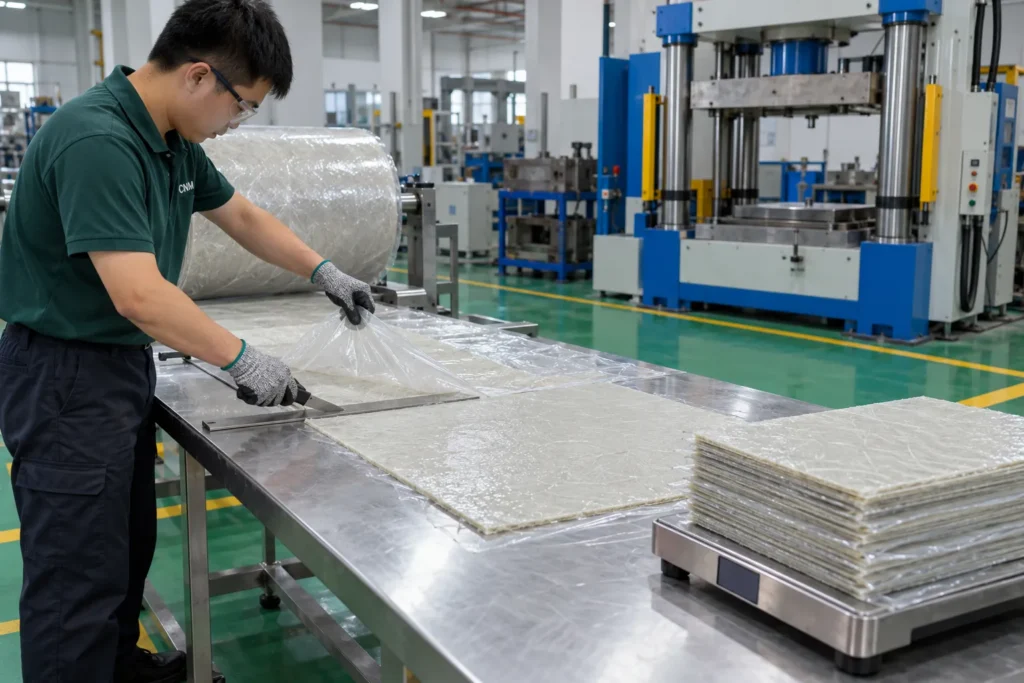
Sheet molding compound: a thermoset compound of resin paste, fillers and chopped glass fibers, typically about 25 mm long, supplied as a sheet between carrier films.
Can I recycle BMC and SMC parts?
Cured thermosets cannot be remelted. Ground scrap can be used as filler in some applications, and recycling routes such as co-processing in cement kilns exist.