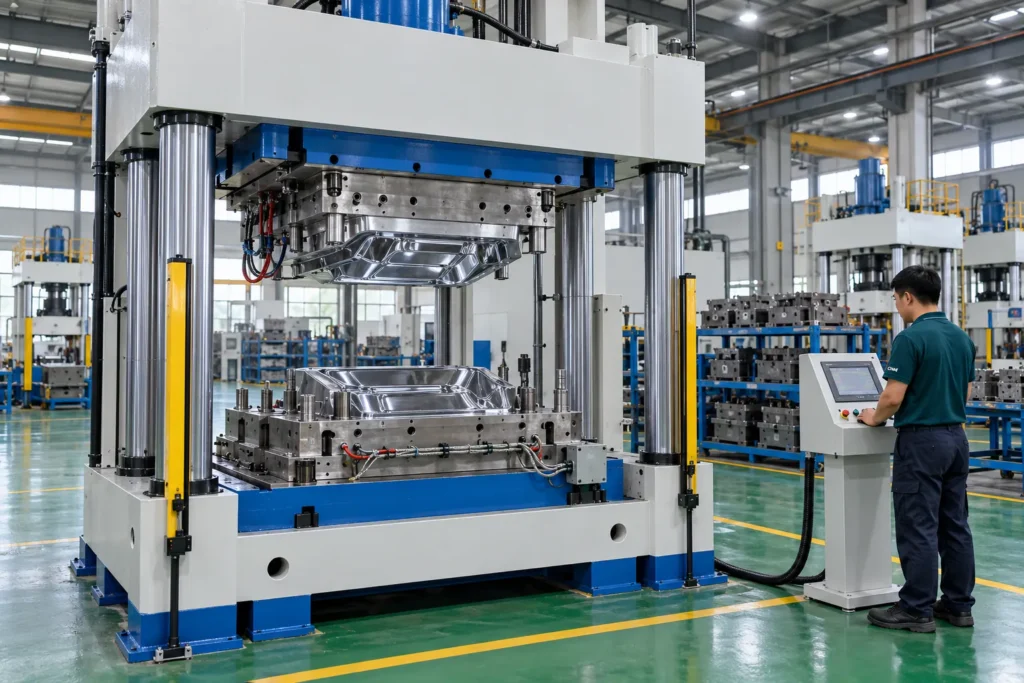
BMC compression tooling
When compression molding is the better route for BMC
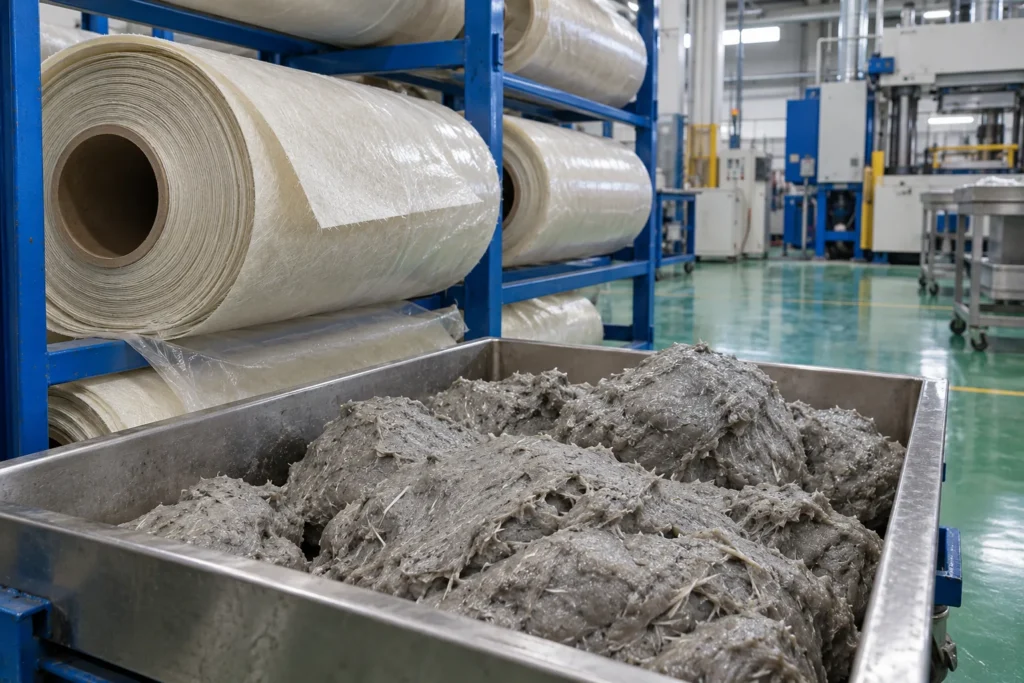
BMC can also be compression molded. A weighed charge of the dough is placed in the open, hot mold and the press closes on it. The fibers stay longer than in injection molding because the compound is not sheared through a screw, runner and gate, so compression is often chosen for thick walls, higher strength and lower volumes.
Which route suits your part depends on its geometry, wall thickness, mechanical requirements, tolerances and annual volume. We look at these in the DFM review and recommend one.
Typical reasons to choose compression for BMC
- Thick sections and simple, open shapes
- Longer fibers and higher strength in the part
- Lower volumes, where a simpler mold pays off
- Parts too large for the available injection shot size
- Less material lost in runners and sprues
BMC compression mold FAQ
Is compression molding stronger than injection molding for BMC?
Generally yes. Compression molding moves the compound a shorter distance with less shear, so more of the fiber length is kept and parts are usually stronger and tougher than the same compound injection molded.
When is BMC injection molding the better choice?
For small and medium parts with fine detail, thin walls or tight dimensions in higher volumes, where the faster, automated cycle pays for the higher mold cost.