Thermoset tooling
BMC and SMC molds for compression and injection molding
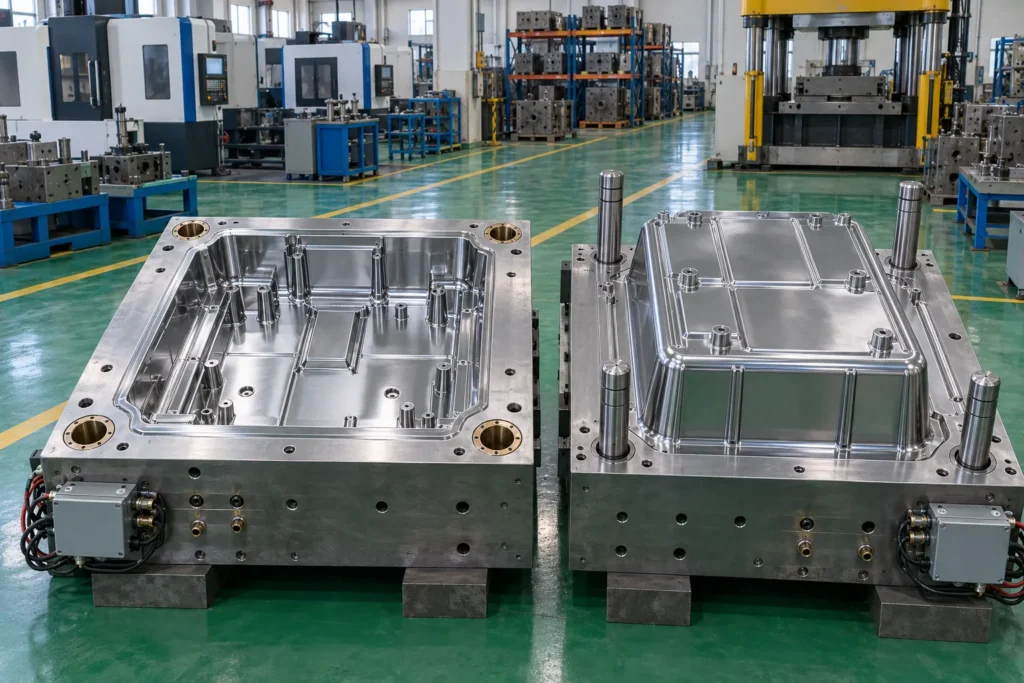
A BMC or SMC mold is the hot side of the process, the opposite of a thermoplastic injection mold. It runs at typically about 140–170 °C, and the compound flows and cures inside it. The tool therefore has to hold an even surface temperature, seal a low-viscosity compound at the parting line, resist wear from the glass fibers and release a fully cured part every cycle.
We design and build SMC compression molds, BMC compression molds and BMC injection molds. Each mold is laid out for your part, the press it will run in and your expected annual volume.
What we specify on a BMC or SMC mold
| Heating | Electric cartridge heaters, or oil or steam channels, with thermocouples in both halves. The layout aims to keep the molding surface within typically about ±3–5 °C. |
|---|---|
| Shear edge | Compression molds have a telescoping shear edge. Clearance is typically about 0.05–0.10 mm per side for SMC, so the charge is trapped and the flash stays thin. On long-running molds the shear edge is hardened or made as replaceable inserts. |
| Surface | Molding surfaces are polished and usually hard-chrome plated, typically a few hundredths of a millimeter thick, for release, wear resistance and a consistent part finish. |
| Steel | P20-type pre-hardened steel for lower volumes; hardened grades such as H13-type for long runs, high glass content and BMC injection. The choice follows the compound, the cavity pressure and the mold life you need. |
| Venting and ejection | Vents where flow fronts meet and at the end of fill. Ejector pins, stripper plates or air ejection sized for a hot, rigid part. Stops that set the final wall thickness. |
Chrome-plated compression molds with shear edges for SMC panels, enclosures and covers.
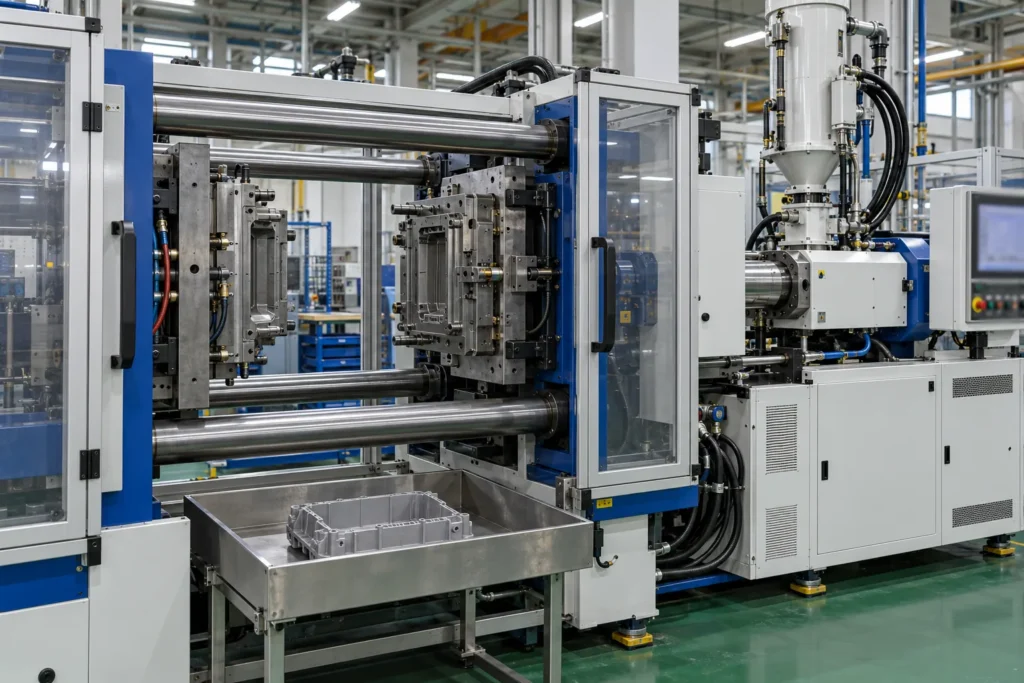
Thermoset injection molds for BMC reflectors, breaker housings, motor parts and insulators.
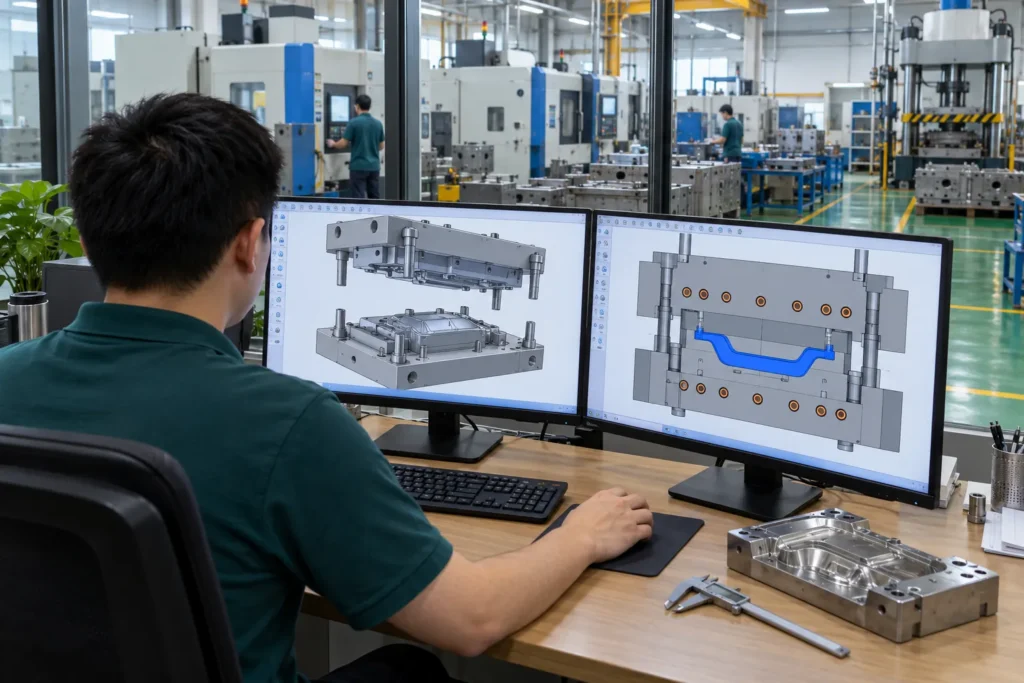
Part review, design for manufacturing and 3D mold design for thermoset parts.
BMC & SMC mold FAQ
What is the difference between a thermoset mold and a thermoplastic injection mold?
A thermoplastic mold is cooled so the melted plastic freezes. A thermoset mold is heated, typically to about 140–170 °C, so the BMC or SMC cures in the tool. Thermoset molds also need tight shear edges or fine vents to contain a low-viscosity compound, and wear-resistant, usually chrome-plated surfaces because of the glass fibers.
Which mold do I need: compression or injection?
SMC parts are compression molded. BMC parts can be injection molded, which suits smaller, detailed parts in higher volumes, or compression molded, which suits thick sections, lower volumes and parts that need longer fibers. We recommend the route after reviewing your part and volume.
Why are SMC molds chrome plated?
Hard chrome on the cavity and core helps the cured part release, protects the polished steel from the abrasive glass fibers and keeps the part finish consistent. When the chrome wears, it can be stripped and re-plated.
How long does a BMC or SMC mold last?
It depends on the steel, the hardness of the shear edge and gates, the glass content of the compound and how the mold is maintained. Worn chrome can be re-plated and shear-edge or gate inserts replaced. Agree the expected mold life in the quotation, because it decides the steel and the construction.
What information do you need to quote a BMC or SMC mold?
A 3D model (STEP or IGES) and a 2D drawing with tolerances, the material or performance requirements, the expected annual volume, the press the mold will run in if it runs at your plant (platen size, daylight, tonnage, heating supply), and any surface or color requirements.