China United Mould

SMC & BMC Compression Molding

Compression molding

How SMC and BMC compression molding works

Compression molding presses a weighed charge of SMC or BMC between the two halves of a heated mold in a vertical hydraulic press. The compound flows to fill the cavity, then cures under heat and pressure. Because it only flows a short distance, the glass fibers stay long and the parts are strong and stiff.

Typical conditions are a mold temperature of about 140–160 °C, a molding pressure of about 5–15 MPa on the projected area of the part (higher for deep or heavily ribbed parts), and a cure time from under a minute to a few minutes depending on wall thickness. The actual settings are fixed during mold trials for each part and compound.

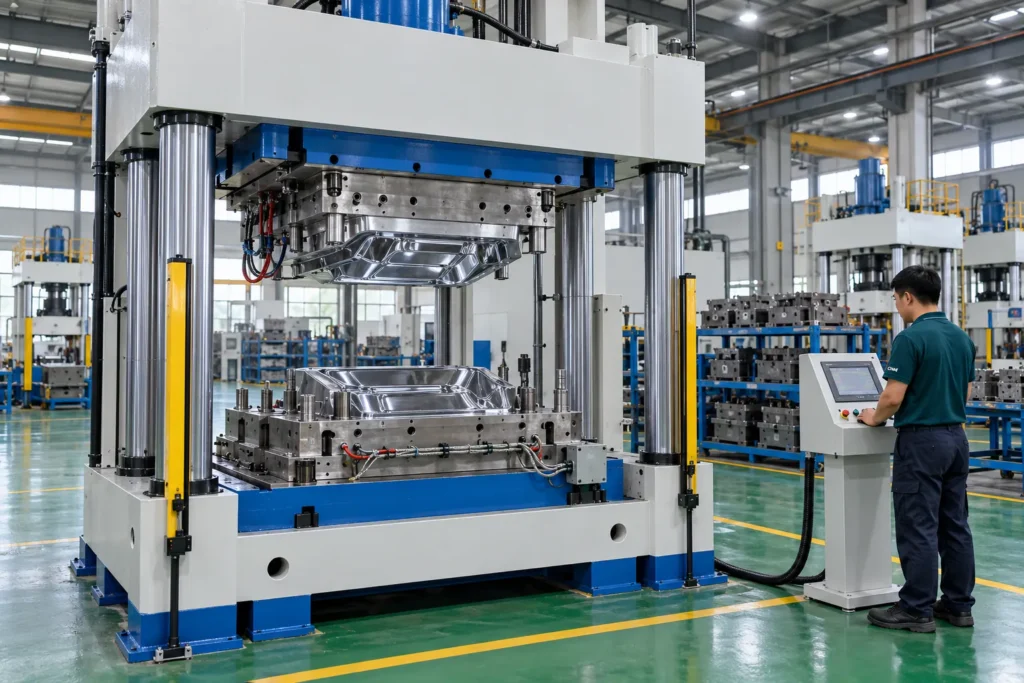
Four-column hydraulic compression press with an SMC mold, open and stopped
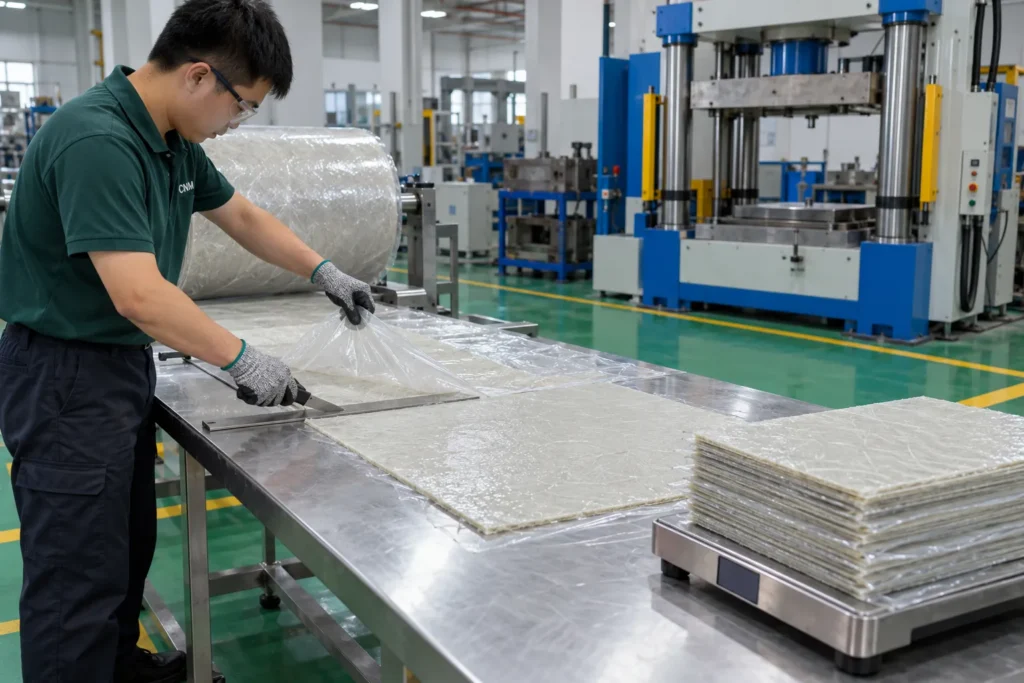
Cutting SMC sheet into charge plies on a cutting table

Process steps

Compression molding at a glance (typical)

MaterialsSMC, BMC and other thermoset molding compounds
PressVertical, downstroking hydraulic press
Mold temperatureAbout 140–160 °C
PressureAbout 5–15 MPa on the projected part area; higher for deep or heavily ribbed parts
Cure timeFrom under a minute to a few minutes, mainly set by wall thickness
Part sizeSmall to very large, limited by press platen and tonnage
StrengthsLong fibers, high strength, little material waste, large parts

Compression molding FAQ

What decides the cycle time in compression molding?

Mainly the cure time, which depends on wall thickness, mold temperature and the compound. Charge loading, press closing and part removal add to it.

What is vacuum-assisted compression molding?

Air is pulled out of the mold just before it closes fully on the charge. This reduces porosity and blisters in parts with deep ribs or complex shapes.


Have a BMC or SMC part in mind? Send us your drawing for a quotation.