China United Mould

BMC vs SMC

Comparison

BMC vs SMC: differences, properties and applications

BMC and SMC use similar ingredients but differ in form, fiber length and how they are molded. SMC is a sheet with longer fibers, compression molded into larger, stronger parts. BMC is a dough with shorter fibers that flows further, and is injection or compression molded into smaller, more detailed parts.

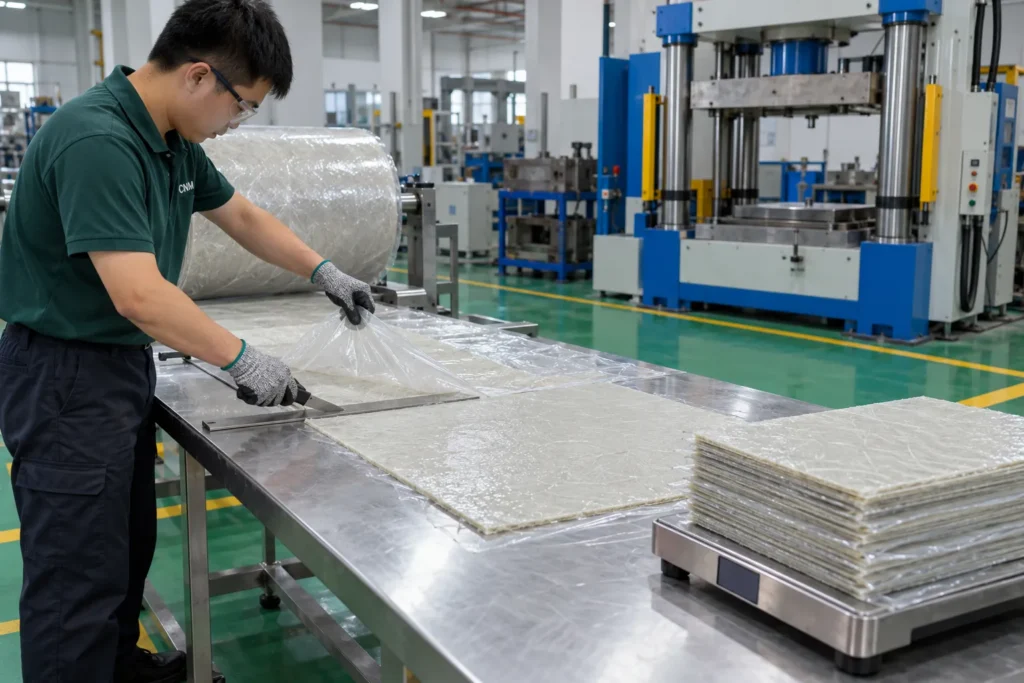
Cutting SMC sheet into charge plies on a cutting table

Side-by-side comparison

SMCBMC
FormSheet between carrier films, cut into a chargeDough or log, weighed or fed by a stuffer
Fiber length (typical)About 25 mmAbout 3–12 mm
Glass content (typical)Often about 25–30%, higher for structural gradesOften about 10–30%
Molding processCompression moldingInjection, compression or transfer molding
Typical part sizeMedium to very largeSmall to medium
Detail and thin wallsGoodVery good
Strength and impactHigherLower
Typical partsEnclosures, panels, battery covers, water tank panelsReflectors, breaker housings, motor parts, insulators

Values are typical industry ranges; the supplier’s data sheet gives the figures for a specific grade.

BMC vs SMC FAQ

Is BMC or SMC stronger?

SMC, in general. Its longer fibers and the compression molding process give higher strength and impact resistance than BMC of a similar formulation.

Which is better for small, detailed parts?

BMC. Its shorter fibers let it flow into fine detail, thin walls and small features, and it can be injection molded efficiently.

Which is better for large panels and enclosures?

SMC. The sheet is easy to cut and stack into a charge for a large part, and it gives the stiffness and impact strength those parts need.


Have a BMC or SMC part in mind? Send us your drawing for a quotation.