



Many composite parts start life as hand lay-up or spray-up fiberglass (FRP) and move to SMC compression molding when volumes grow. Both use glass fibers and a thermoset resin, but the processes, the parts and the economics are very different.
The two processes
Hand lay-up / spray-up: glass mat or chopped fiber and liquid resin are applied layer by layer onto a single open mold, usually made of FRP, and cured at room temperature or with mild heat. One side of the part is molded; the other is rough.
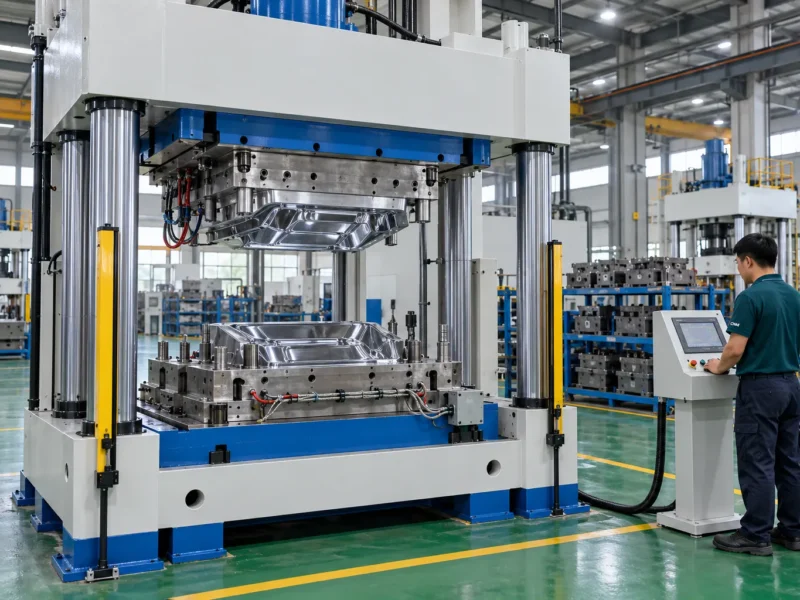
SMC compression molding: a pre-made sheet compound is pressed between two heated steel mold halves and cured in minutes. Both sides are molded and dimensions are set by the steel mold.
Comparison
| Hand lay-up / spray-up FRP | SMC compression molding | |
|---|---|---|
| Mold | Single open mold, often FRP | Matched, heated steel mold |
| Mold cost | Low | High |
| Cycle time | Hours per part | Minutes per part |
| Finished surfaces | One side | Both sides |
| Wall thickness control | Depends on the operator | Set by the mold |
| Part-to-part consistency | Variable | High |
| Molded ribs, bosses, holes | Limited | Yes |
| Labor per part | High | Low |
| Emissions in the workshop | Open resin handling | Closed mold |
| Best for | Prototypes, very large parts, low volumes | Medium to high volumes |
Typical, simplified comparison.
When to switch from FRP to SMC
- Volumes have grown and labor dominates the part cost.
- You need both sides finished, or molded-in ribs, bosses and holes.
- Assembly problems come from varying wall thickness and dimensions.
- Customers expect a consistent surface for painting or a molded-in color.
The break-even point depends on part size, the mold cost and your labor cost. A part redesigned for SMC, with uniform walls and ribs instead of thick sections, often costs less to mold and weighs less. See the SMC mold design guide and what drives the cost of an SMC mold.
Frequently asked questions
Is SMC stronger than hand lay-up fiberglass?
Not necessarily per kilogram. Hand lay-up with woven roving can be very strong. The advantage of SMC is consistent, repeatable parts with molded features at much shorter cycle times.
Can an existing FRP part be made in SMC without changes?
Usually some changes are needed: uniform walls, draft for a matched steel mold and features designed for compression molding. A DFM review shows what to change.
Is RTM an alternative?
Yes. Resin transfer molding uses a closed mold with lower pressure and cost than SMC, and suits low to medium volumes. It sits between hand lay-up and SMC.
Have a BMC or SMC part to discuss? Send your drawing or 3D file through our inquiry form. Our engineers reply with DFM comments and a quotation.