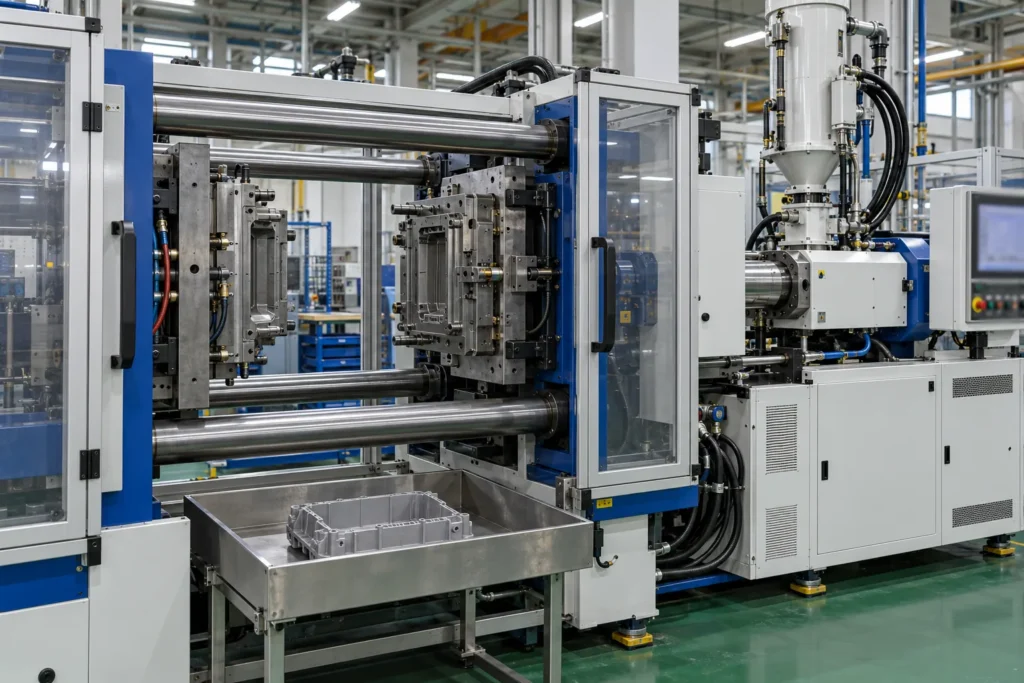
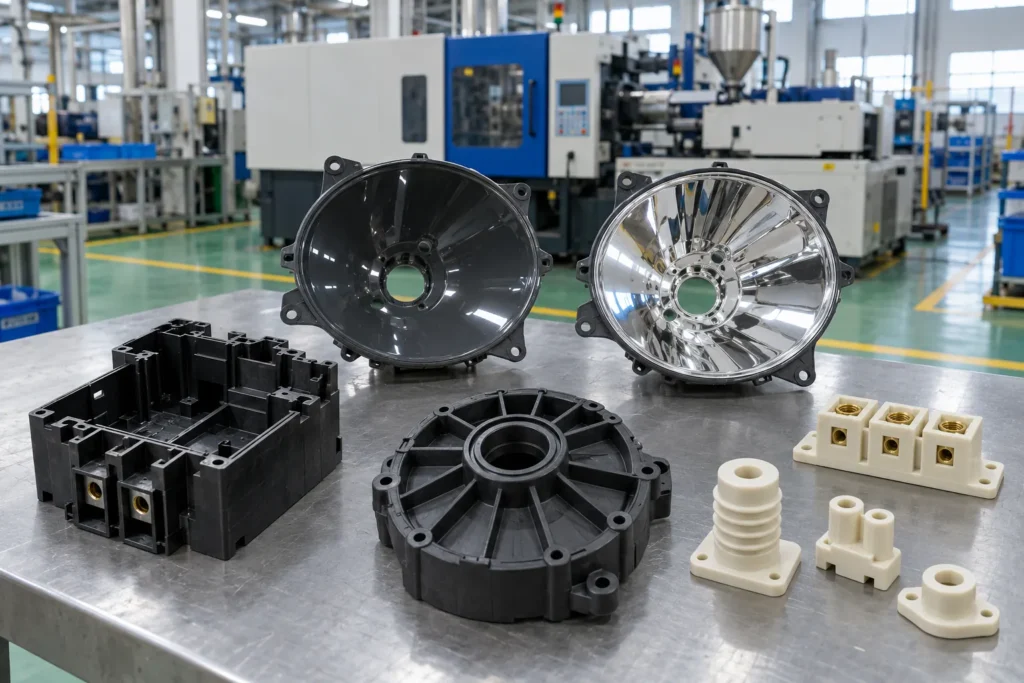
BMC injection molding reverses the temperatures of thermoplastic molding. A stuffer forces the dough-like compound into the screw. The barrel is water-tempered and kept cool, typically about 25–45 °C, so the compound does not start to cure. The mold is hot, typically about 150–180 °C, and the part cures in the cavity.
Cycles are short and easy to automate, and parts come out with low shrinkage, high heat resistance and good electrical insulation. Compared with compression molding, the trade-off is shorter fibers, because the compound is sheared in the screw, runner and gate.
Where BMC injection fits best
Small and medium parts with ribs, bosses and fine detail
Annual volumes high enough to pay for an injection mold
Parts that need low shrinkage and tight dimensions
Reflectors and housings with high-gloss surfaces
Multi-cavity production of small electrical parts
BMC injection molding at a glance (typical)
Material feed
Stuffer into a low-compression screw
Barrel
Water-tempered and kept cool, typically about 25–45 °C
Mold temperature
About 150–180 °C
Shrinkage
Typically about 0.05–0.4%, depending on grade
Strengths
Short, automated cycles, fine detail, tight dimensions
Trade-off
Shorter fibers than compression molding
BMC injection molding FAQ
Can runners from BMC injection molding be reused?
No. Cured thermoset runners cannot be remelted, so mold layouts keep runners short to reduce waste.
How tight are tolerances on BMC injection molded parts?
BMC shrinks very little, so injection molded parts can hold tight dimensions. The achievable tolerance depends on part size and geometry and is agreed at the DFM stage.
Have a BMC or SMC part in mind? Send us your drawing for a quotation.