BMC injection tooling
BMC injection molds for detailed parts in volume
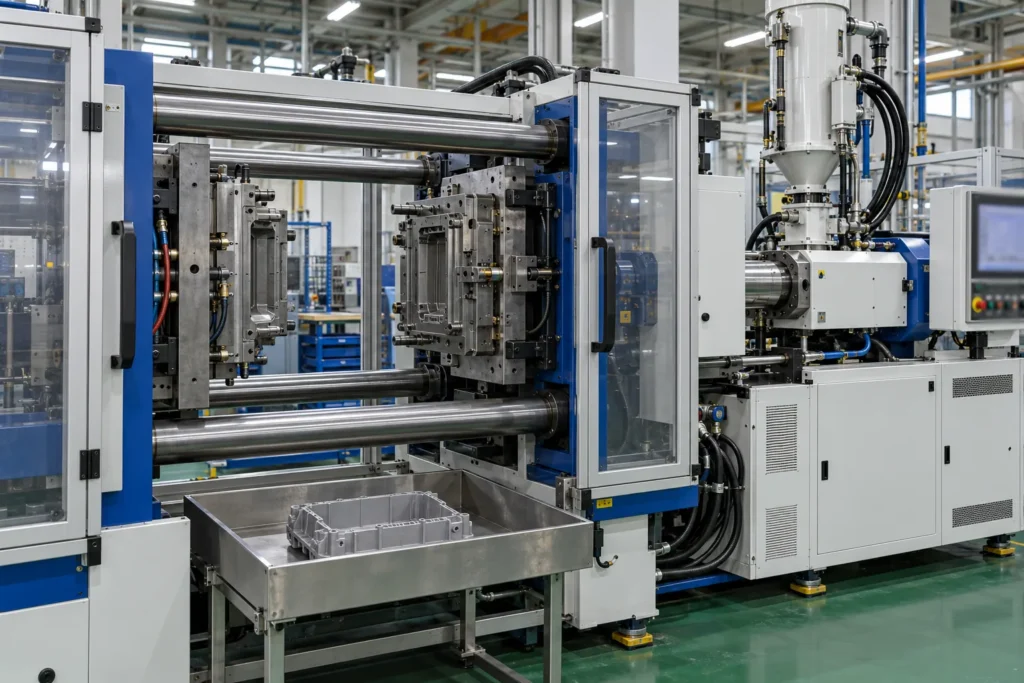
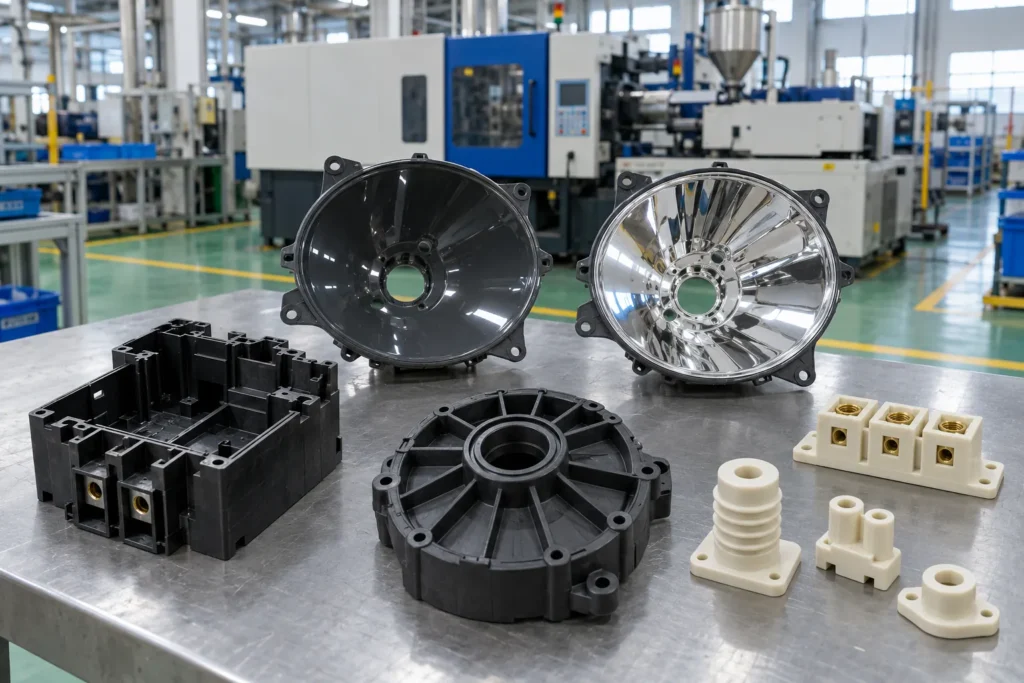
In BMC injection molding, a stuffer pushes the compound into a screw that runs in a cool, water-tempered barrel. The screw injects it into a hot mold, where it cures. The process suits smaller, detailed parts made in volume, such as lamp reflectors, circuit breaker housings, motor end caps and insulators.
The mold needs gates and runners that stand up to glass-fiber wear, thin vents at the end of fill and an even cavity temperature, so dimensions and surface finish stay the same from shot to shot.
Key points of a BMC injection mold
- Short runners and gates sized for a fiber-filled, curing compound
- Hardened, replaceable gate inserts
- Vents at the end of fill and around ribs and bosses
- Electric heating with zoned temperature control
- Ejection designed for thin walls and deep ribs
- Multi-cavity layouts for small parts
- Polished or textured surfaces, including high-gloss surfaces on reflectors that will be metallized
BMC injection mold at a glance
| Process | Thermoset injection molding of BMC (bulk molding compound) |
|---|---|
| Mold temperature | Typically about 150–180 °C, electrically heated |
| Feed | Stuffer feeds the BMC into a low-compression screw in a cool, water-tempered barrel |
| Runner and gates | Short runners and hardened, replaceable gate inserts |
| Venting | Thin vents at the end of fill and around ribs and bosses |
| Cavities | Single or multi-cavity, depending on part size and volume |
| Typical parts | Reflectors, breaker housings, motor end caps, insulators |
BMC injection mold FAQ
Why is the BMC barrel cool and the mold hot?
BMC is a thermoset. The barrel is kept cool so the compound flows without curing, and the hot mold supplies the heat that cures it into its final shape.
Can a BMC part be molded in a thermoplastic injection machine?
Not as it is. BMC needs a thermoset injection unit: a stuffer to feed the dough, a low-compression screw, a water-tempered barrel and enough mold heating capacity for a tool at about 150–180 °C.
What causes porosity or blisters in BMC parts?
Usually trapped air or volatiles: missing or blocked vents, a fill that is too fast, or a cure that is too short. Good venting and a cure time set in trials prevent most cases.